


NPOs-Regulators Connect: Building Trust and Collaboration for Stronger Civil Society Governance
Coalition member Civic Advisory Hub launched the 'NPOs-Regulators Connect' initiative to foster dialogue and trust between non-profit organizations and regulators across Africa. In this story, Julie Butinde, Communications Lead at CAH, shares how NRC is strengthening collaboration and building a more resilient civic space.
As the civic space landscape continues to evolve, driven by new advocacy channels, the weight of Anti-Money Laundering and Countering the Financing of Terrorism (AML/CFT) frameworks and now the declining funding, the strategies for safeguarding and empowering civic space must also evolve.
The NPOs-Regulators Connect (NRC) initiative, led by Civic Advisory Hub (CAH), is driven by this premise. NRC aims to foster dialogue, collaboration, and innovation between non-profit organizations (NPOs) and relevant regulatory authorities at the national, regional and international level. Its core mission is to safeguard civic space by strengthening sector governance through constructive engagement, trust-building, and mutual understanding.
Why Trust?
For too long, mutual suspicion has defined the relationship between NPOs and governments. This mistrust benefits no one. The NRC Initiative, adopted as Talk to Your Regulator in Uganda and Kenya, and known by its local taglines: A Re Bue in Botswana and Kede Na Wenesu in South Sudan, all of which translate to let’s talk, is grounded in the principle that effective collaboration starts with open dialogue. When people talk, misunderstandings can be resolved; when they do not, mistrust thrives.
How it Works
The NRC Initiative uses a mix of open dialogue, focused problem solving, and practical training to help NPOs and regulators understand each other and work better together.
- Open roundtable meetings are the entry point. They bring together a wide range of NPOs to talk through emerging regulatory challenges, share updates on policy changes, ask questions, and track progress on issues that affect the sector. These sessions help surface concerns early and create space for honest conversation.
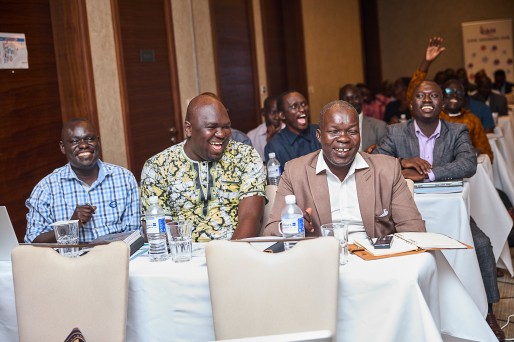
NPO leaders in Juba, South Sudan, share a light moment during the discussion, 23 July 2025.
- Closed-door meetings go a step deeper. Here, selected NPO leaders meet with regulators, local leadership and security officials to address the most pressing issues raised in the roundtables. These discussions look at the bigger regulatory and operational environment, identify barriers that slow or restrict NPO work, and push for the voices of civil society to be included in policy decisions.
- Targeted training and workshops round out the model. These sessions give NPOs practical guidance on financial reporting, AML/CFT compliance, understanding FATF standards, protecting against terrorist financing risks, and strengthening internal governance. The goal is to equip NPOs with the knowledge and skills they need to engage confidently and stay compliant while safeguarding civic space.
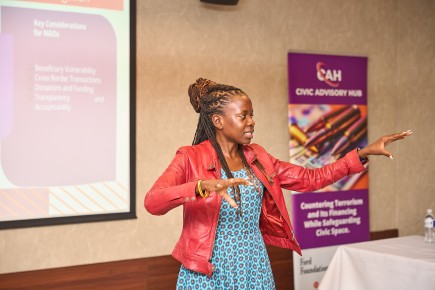
Hilder Achiro
Protecting Your Charities from ML/TF Abuse: It Begins With You. Workshop, Juba 22nd July, 2025
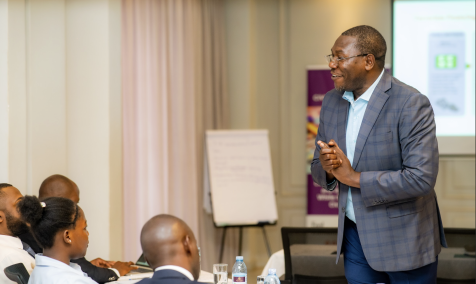
Yona Wanjala
Protecting Your Charities from ML/TF Abuse: It Begins With You. Workshop, Kampala 5th May, 2025
Lessons Learned
While there are contextual differences across countries and regions, there are equally similarities. In our experience, regulators are often willing to collaborate with NPOs to improve oversight of the sector and, at the very least, to avoid non-compliance ratings or the risk of grey listing by the Financial Action Task Force (FATF).
In Kenya, the launch of the Talk To Your Regulator platform was an unprecedented event. For the first time, NPO actors, the regulators, Public Benefit Organisations Regulatory Authority (PBORA), and representatives from Financial Reporting Centre (FRC) met in one room for open dialogue.
“Since then, Talk To Your Regulator has improved the once tense relationship between NPOs and regulators in Kenya. It has also opened the door for collaboration on developing a risk-based framework for monitoring the NPO sector,” reports Fredrick Okado of MUHURI, Kenya.
Evidence-based engagement has also proven effective. In Uganda, NPOs were removed from the list of “accountable persons” under the Anti-Money Laundering Act, 2013. This reform followed sustained advocacy and a policy paper produced by the National NPO Working Group on FATF, in which CAH plays a key role. The paper highlighted the unintended impact of the regulations and offered practical recommendations that shaped the changes.
Challenges Along the Way
Mutual distrust and suspicion remain one of the greatest challenges. Civil society organizations play a vital role in holding governments accountable, and this responsibility does not always sit well with those in power. Meanwhile in some contexts, governments continue to misuse laws to restrict civic activity. Overcoming this tension requires patience, persistence, and evidence-based advocacy. Establishing trust is not a one-time effort, it is a continuous process that demands transparency and sustained dialogue from both sides.
Scaling the NRC model beyond capital cities has also been difficult. Expanding to provinces and districts requires significant financial and human resources, which can unintentionally leave out grassroots NPOs. In Zimbabwe, this was addressed by working through lead organizations such as the National Association of NGOs, which helped identify strong local networks to mobilize NPOs and regulators at provincial and district levels.
Funding cuts have created further disruptions. Some NRC activities supported through donor grants, including USAID, were affected and slowed implementation. Despite shrinking resources, we remain optimistic. One of the short-term solutions has been shifting some engagements online through The LeadersTalk Webinars, allowing the work to continue even with limited funding.
Recommendations for Strengthening Engagement
Build partnerships and networks: Collaboration is more effective when done collectively. CAH works with a diverse network of civil society actors, academics, the private sector, and government bodies at national, regional, and continental levels to build collective power and amplify shared voices.
Invest in knowledge and capacity: Dialogue alone cannot achieve sustainable change. CSOs must have the technical understanding and advocacy skills. CAH’s core competence lies in our strategic research. We also train and offer resource support to local/regional leaders, enabling them to strengthen their networks.
Maintain consistency: Policy change takes time. Regular communication and follow-up build credibility and reinforce the commitment to partnership.
At the heart of it all is trust building. When NPOs and regulators engage openly, share evidence, and collaborate toward shared goals, they lay the foundation for a stronger and more resilient civic space across the continent.
This is the vision that drives the NPOs–Regulators Connect (NRC) initiative: a future where African civil society leads its own development agenda, where collaboration replaces suspicion and partnership drives progress.
--------------------------------------------
Author Bio
Julie Butinde currently leads Communications at the Civic Advisory Hub. She has a strong background in strategic storytelling, research, and content development. With experience in advocacy, policy, and marketing campaigns, she has contributed to high-impact reports, briefs, and brand messaging across sectors.